
In the digital landscape, platform reliability has become a cornerstone of user trust, satisfaction, and long-term engagement. Users expect seamless experiences, minimal downtime, and consistent performance, and the presence of quality signals plays a critical role in shaping these expectations. Quality signals are observable indicators that suggest a platform is stable, secure, and capable of delivering consistent results. They can manifest in various forms, including performance metrics, design consistency, transparency measures, and user feedback mechanisms. Each of these signals interacts to form a perception of reliability that can either reinforce user confidence or undermine it, depending on how well they are implemented.
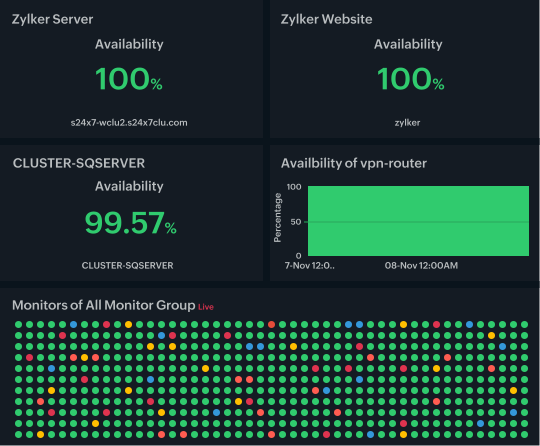
One of the most direct quality signals is uptime and performance monitoring. Platforms that display metrics such as system availability, response times, or historical performance trends convey transparency and a commitment to reliability. When users see that a service maintains high uptime and fast response times, they are reassured that their interactions will be smooth and predictable. Conversely, frequent interruptions, slow load times, or unexplained performance degradation serve as negative signals that erode trust. Beyond raw numbers, the presentation of these metrics matters; clear and accessible dashboards or status pages allow users to understand current system conditions without confusion, creating an impression of control and accountability.
Error handling and recovery mechanisms also provide essential signals. Users often encounter unexpected scenarios, such as failed transactions, connection losses, or incorrect outputs. Platforms that gracefully manage these situations, offering informative error messages, real-time updates, and clear steps for resolution, signal robustness and preparedness. Quality signals in this context are not just about minimizing errors but demonstrating proactive management of inevitable disruptions. For example, a transaction system that immediately informs the user of a failed action and provides confirmation of corrective measures communicates reliability far more effectively than one that simply fails silently. Such experiences reduce frustration, maintain workflow continuity, and reinforce user trust over time.
Consistency in user interface design is another subtle but powerful quality signal. When a platform maintains consistent visual patterns, interaction flows, and feedback mechanisms, users develop familiarity that translates to perceived stability. Inconsistent layouts, erratic button behavior, or unpredictable feedback can be interpreted as indicators of a system that is unreliable or poorly maintained. Beyond aesthetics, design consistency influences how users interpret operational stability. When every component behaves as expected, users subconsciously associate predictability with reliability, which in turn enhances engagement and reduces cognitive load during interactions.
Communication practices, including notifications, alerts, and updates, serve as critical quality signals. Regular updates about system changes, scheduled maintenance, or resolved incidents communicate transparency and commitment to operational integrity. Users who are informed of potential disruptions or new features perceive the platform as actively managed and trustworthy. In contrast, unexpected downtime or unannounced modifications can signal neglect or instability, undermining confidence even if the underlying performance is technically sound. Well-crafted communication demonstrates respect for users’ time and expectations, which is a vital component of perceived reliability.
Security features and data protection measures also function as quality signals. Platforms that clearly demonstrate secure authentication, encryption, and privacy policies signal that user safety is prioritized. Even if users never encounter a breach, the presence of visible indicators—such as verified certifications, two-factor authentication, and transparent privacy controls—creates an environment of trust. These signals extend beyond technical assurances to influence behavioral perceptions; users are more likely to engage with a platform consistently if they feel confident their information is protected and that the platform is adhering to high operational standards.
User support systems further reinforce reliability through direct interaction. Platforms offering accessible help channels, responsive customer service, and proactive support interventions signal readiness to address issues promptly. Quality signals in support interactions include timely responses, clear guidance, and effective problem resolution. Users interpret these interactions as extensions of the platform’s overall reliability. When support systems consistently resolve issues and provide reassurance, users develop a sense of confidence that even in rare adverse situations, the platform will maintain integrity and continuity.
Feedback mechanisms and ratings can serve as social proof, acting as indirect quality signals. Positive reviews, high user ratings, and visible community engagement communicate that others have experienced dependable performance. These indicators can significantly influence new users’ perceptions of reliability, especially in environments where direct evaluation is challenging prior to engagement. Conversely, negative reviews or reports of frequent issues can act as early warning signals, prompting users to approach cautiously or seek alternatives. Quality signals derived from peer experiences are especially powerful because they combine perceived reliability with credibility established by the community.
Automation and predictive maintenance can also signal reliability. Platforms that anticipate potential issues—such as detecting anomalies in usage patterns or automatically optimizing system performance—demonstrate foresight and proactive management. These behind-the-scenes operations may not always be visible, but when combined with user-facing indicators, such as alerts of resolved issues or performance improvements, they strengthen perceptions of a platform that is consistently monitored and maintained. Users infer reliability not only from current performance but from the platform’s ability to prevent problems before they affect them.
Ultimately, the interplay of these quality signals shapes a comprehensive perception of platform reliability. Uptime metrics, error handling, design consistency, communication transparency, security measures, user support, social proof, and proactive maintenance collectively inform user judgments. Reliable platforms cultivate trust by delivering not only functional stability but also a narrative of competence, responsiveness, and accountability. In an environment where alternatives are plentiful and user expectations are high, the subtle presence of these quality signals can determine whether a platform retains users or loses them to competitors. Over time, the consistent reinforcement of these signals builds an intangible yet highly influential reputation for reliability, which is central to long-term engagement and satisfaction.
Every interaction, from a single login to complex transaction sequences, communicates cues about a platform’s dependability. Users internalize these cues, consciously or subconsciously, forming mental models that guide future behavior. Platforms that strategically embed and amplify quality signals effectively create a feedback loop: reliable performance encourages engagement, engagement generates data and insights, and insights inform continuous improvement. In this way, quality signals are not merely indicators—they are active agents in maintaining and enhancing the perceived reliability of a platform, shaping both immediate experiences and long-term relationships.




Leave a Reply